Mathematics for Industry Network – 2 years on

As the Mathematics for Industry Network (MI-NET) prepares to launch their 3rd year of events we consider it timely to reflect back on our achievements.

Mathematics for Industry Network (MI-NET) was set up as a COST Action in May 2015. Our main objective is to facilitate more effective widespread application of mathematics to all industrial sectors, by encouraging interaction between mathematicians and industrialists, in particular through 1. industry-driven problem solving workshops 2. academia-driven training and secondments.

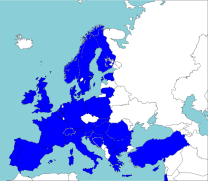
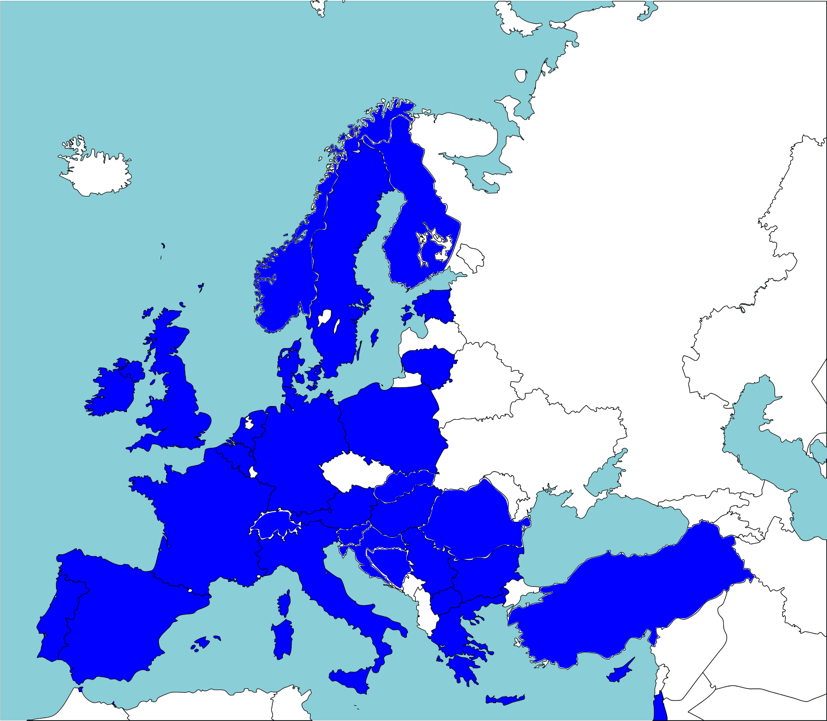
MI-NET started as a small network of 15 countries and has noEuropew grown to include 31 countries.

In total, we have supported over 46 events, which include 8 Industrial Workshops, 8 European Study Groups with Industry (ESGI), 5 Modelling Weeks, and 23 Short-Term Scientific Missions (STSMs) to both academic and industrial hosts. For our 3rd year of activity we are projected to deliver in the excess of 22 events which will include 4 ESGI (in Portugal, Spain, Slovenia, and Cyprus), 7 Industrial workshops (Austria, Portugal – Aveiro and Coimbra,  Israel, Switzerland, Hungary and Cyprus), 5 Modelling Weeks ( UK, Spain, Ireland, Israel and Macedonia) and at least 4 STSMs.

In recognition of our successful last two years we were pleased to hear news of an increased budget for the next financial year and to be invited to apply for a 10-15 minute slot at the press briefing of this year’s European Conference for Science Journalists (Copenhagen, 26-30 June). If successful, we will be presenting alongside other organisations like CERN, ERC, ESO, ESS, ESA, Max IV, or the European Commission’s JRC. Among the media outlets who’ve already confirmed their attendance are the BBC, CNN, Financial Times, Wall Street Journal, Nature, New Delhi Television Limited, Science et Avenir, as well as major Danish newspapers, Danish national broadcaster DR, Videnskab.dk and Science Nordic (leading Scandinavian science websites). Our Action was also specifically mentioned by European Commissioner for Research, Science and Innovation, at the ‘Inspiring researchers, strengthening Europe-Portugal in the spotlight’ day.

Last year we were particularly excited to support the 1st Industrial workshop in Switzerland as well as the 1st study group with industry in Cyprus (ESGI125). Next year, we are looking forward to, amongst other events, hosting the 1st modelling week in Israel.

We are confident that by exploiting the mathematical knowledge and methodologies of academics we are providing European industry with a competitive advantage. Universities are benefiting, as mathematicians are able to focus on particularly relevant and cutting edge research problems. The training of Early-Career Investigators in particular is creating a generation with problem solving and communication skills and collaborative links that will be essential to maintain the goals of this Action in the future long after this funding has finished.

We have captured reports from study groups and modelling weeks as well as blogs from participants who have shared their experience while attending our events. If you are interested in joining MI-NET or would like to apply for funding to support an activity in the world of industrial mathematics please contact us. We would be delighted to hear from you!

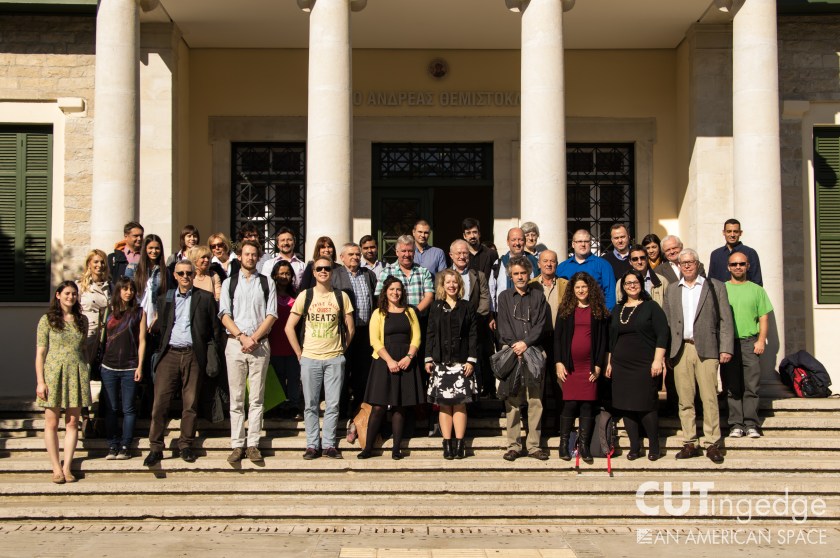
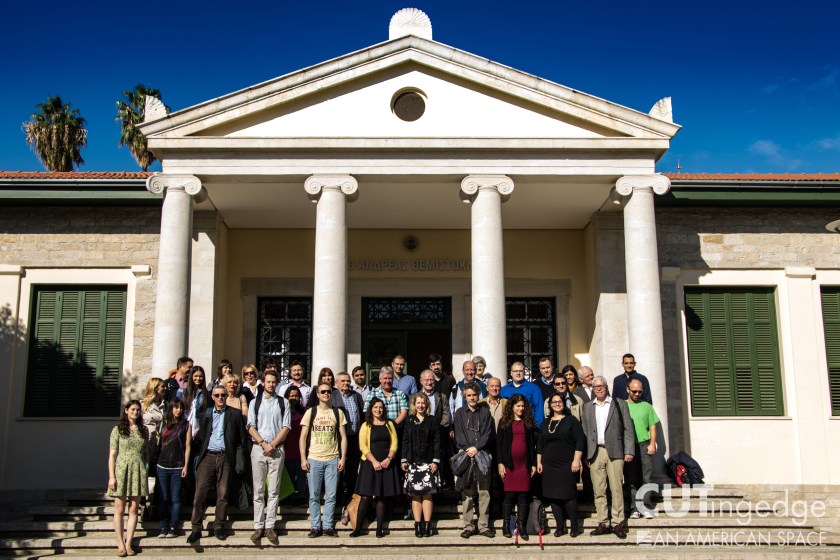
group.jpg


Enabling European collaboration in industrial maths

MI-NET – the EU COST Action Mathematics for Industry Network hosted by IMI – was delighted to support the first ever Study Group (problem-solving workshop) with Industry in Cyprus last month.

The workshop, 125th in the European series, brought together 50 academics from 17 different countries to work intensively for a week on tackling four real Cypriot industry challenges using mathematical thinking. From automatically generating the instructions for constructing a given toy from a kit of parts to optimising bus routes in urban Nicosia, there was a great selection of challenges for mathematicians to work on.

esgi125_small

The Chair of ESGI 125 and MI-NET Management Committee Member for Cyprus, Dr Katerina Kaouri from the Cyprus University of Technology, commented on MI-NET’s key role:

“MI-NET funding has been catalytic for the development of industrial mathematics in Cyprus. In addition to the financial and organisational support of ESGI125, the Annual Meeting of MI-NET being held in Cyprus in the same week enabled several internationally-leading experts in industrial mathematics to participate in the ESGI125 and in various meetings with policy-makers.”

On the results obtained from the workshop, Andreas Athanasiades, General Manager of the Transport Organisation of Nicosia District (OSEL) said:

“Once again thank you very much for the report. I would like to congratulate everyone in the team and express my gratitude for all the hard work and the dedication that you have put in this project. I hope that I will be able to utilize this work for the benefit of public transportation in Cyprus and that it can cause as much impact as it should.”

For more photos from the week, please see the Study Group with Industry Cyprus Facebook page.

In the last year MI-NET has supported 6 industrial workshops, 2 mathematical modelling weeks, 5 Study Groups with Industry and 12 research visits across Europe, and is pleased to be sponsoring the First Israeli Modelling Week, to be held in July 2017.

To view MI-NET’s programme of industrial maths activities, and apply for research networking funding, see MI-NET’s event and funding pages.

MI-NET Minisymposium – 16th June 2016 (ECMI 2016 conference)

Dr Joanna Jordan (MI-NET Chair) and Dr Filipa Vance (Grant Holder) organised a MI-NET minisymposium within the ECMI 2016 conference at Santiago de Compostela in Spain.

The minisymposium included 4 talks on the various ways a researcher can participate in MI-NET activities and featured a lively and fruitful discussion between the minisymposium participants.

A short description of the talks, with downloadable slides, follows below:

Dr Joanna Jordan (Bath Institute for Mathematical Innovation, UK) opened the minisymposium by describing the background to MI-NET, outlining the MI-NET vision, the benefits of joining the network, planned events, and the funding available for industrial maths activities.

Dr Vivi Rottschäfer (Leiden University, NL) gave a talk with the title Bringing Companies and Mathematicians together via European Study Groups with Industry. Vivi eloquently relayed her experiences from initiating and coordinating Study Groups with Industry in the Netherlands every year, sharing achievements and challenges. In the Netherlands, the Study Group Steering Committee (Vivi is the chair of the committee) identify a local research organization every year and inform them how to run a Study Group. Over the months the Committee keep in contact with the organisation to see how they are progressing. A useful outreach practice was also shared by Vivi: to communicate Study Group results to the public using  publications that are written by professional science writers. Moreover, they developed a national website that serves as an archive of all previous Dutch Study Groups and will facilitate organisation of upcoming ones.

Vivi closed her talk by inviting the audience to the next Dutch Study Group, 23-27 January 2017 in Amsterdam. MI-NET funds Study Groups in countries that do not organise these yet through a competitive application process-you can find more details here.

Subsequently, Dr Tihomir Ivanov (University of Sofia, BG) delivered a talk on Modelling Weeks in the MI-NET framework. Tihomir is the Chair of the Organising Committee of Study Groups in Bulgaria and the lead organizer of the 30th ECMI Modelling Week. Tihomir recounted the time he participated in an ECMI Modelling Week (MW) as a student, many years ago. He remembers the MW as a great experience that initiated him in solving industrial problems with mathematics, and to the benefits of teamwork. He went on to describe the structure of a Modelling Week. This year the ECMI Modelling Week is taking place 17-24 July in Sofia, just before the Study Group in Bulgaria (ESGI 120). MI-NET offers funding opportunities for ECMI-style Modelling Weeks – you can find more details here.

Finally, Dr Katerina Kaouri (Cyprus University of Technology, Cyprus) talked about Research Visits within MI-NET. Research visits (Short Term Scientific Missions –STSMs) are exchange visits to an institution or laboratory in another COST country that is part of MI-NET. Visits can last between 5-90 days for an established researcher and 5-180 days for an early career investigator (up to 8 years post PhD). They can be from a university to another university, and from industry to academia or vice versa. Dr Katerina Kaouri presented the process of applying for an STSM and relayed her experience from a recent STSM to the University of Oxford. Katerina is also leading the organization of the 1st Study Group with Industry in Cyprus, to take place 5-9 December 2016 with financial support from MI-NET and she finished her presentation by inviting all to attend.

PhD Modelling Week – Verona, Italy

20160910_110901This MW, supported by COST action TD1409 MI-NET, and organized by the joint Doctoral School of Mathematics of the Universities of Trento and Verona, took place in Verona, from 4th to 10th September 2016 at the Department of Computer Science, and gathered PhD and master students in Mathematical Sciences coming from Austria, France, Germany, Italy, Sweden, Serbia and Ukraine.
The participants were subdivided in five groups to work on different problems defined and supervised jointly by academic and industrial partners. The teams presented their results on saturday morning at the Conference room of Confindustria Verona , and some students felt enthusiastic about their MW experience, hear the interviews made by UniVRMagazine
The problems treated during this MW were


Glasgow Student Modelling Week, 12th to 16th September 2016

csq-vxixeaajc4f-jpg-large On the 12th-16th September 2016 in the University of Glasgow, the Centre for Mathematics Applied to the Life Sciences (CMALS) in conjunction with SofTMech hosted a Mathematics for Industry PhD modelling week. This event gathered PhD students from all over Europe with a variety of backgrounds, with the aim being to give the students a chance to collaborate with others working on a variety of problems arising in the field of biomedical applied mathematics.

The week began with some talks relevant to the various industrial problems followed by more detailed technical talks by the leaders of each group. There were three problems on offer for the week. The first group (supervised by the SofTMech team) was modelling the soft tissue mechanics in the heart. A key issue that arises in this field is that material parameters required for modelling cannot be directly measured but are inferred from medical images. This “inverse modelling” approach involves the combination of mechanistic modelling and statistical parameter inference using Gaussian processes. The other two groups were working on modelling medical devices and protein/molecule interactions.

Medical Devices Problem

The problem I (Niall) worked on involved the modelling of controlled drug release from medical devices, specifically orthopaedic implants. Our group leaders for the week were Dr. Martin Meere from NUI Galway and Dr. Giuseppe Pontrelli from CNR in Rome.

It is believed that the local delivery of drug from an implant may be an ideal way of tackling issues such as infection, inflammation and pain normally associated with the foreign body response when an orthopaedic implant is implemented. Our goal for the week was to develop models of some drug-releasing implants, where the drug can be loaded and released in a controlled optimal manner depending on the situation at hand. A normal problem associated with traditional drug delivery is a large burst of drug can be toxic while a slow release of drug may keep concentrations below an effective threshold.

We were pointed towards an experimental paper by Argarate et al. [1] in which polymer (PLDL) implant disks were coated with one or two layers containing combinations of drugs and biodegradable polymer (PLLA).  There were 9 of us in the group, and we split into 3 smaller sub-groups to work on reproducing 3 different release profiles (amount of drug released vs. time) published in the experimental paper. The first sub-group worked on a pure dissolution problem, where drug is directly loaded onto the implant with no polymer. The other two sub-groups worked on drug release from single and double layer polymer/drug coatings.

Our approach typically involved developing simple mechanistic PDE models accounting for diffusion and convection of the drug molecules then prescribing suitable boundary and initial conditions for the particular case. When we had a grasp on the simpler problem we would then refine the model by reducing the number of assumptions and prescribing more realistic conditions. The skill set of the group was quite varied with some students more comfortable with numerical simulations of the processes and others preferring to seek analytical or approximate solutions. This balance worked well as there was good crossover between the approaches, with students often jumping between subgroups when they thought they could help.

Drug Discovery Problem

I (Paul) worked on the drug discovery problem proposed by GlaxoSmithKlyne. The GSK representative, Dr Armin Sepp, was present throughout the week to provide information and clarification on the problem as required. We were also supported by our academic mentor, Dr Sean McGinty of the University of Glasgow. Our challenge was to develop models for cell signalling, with a view to modelling antibody-mediated interference in signalling. A comprehensive model for this process could have important consequences for the drug discovery and development process, and might be used to decrease the enormous cost expended in drug development.

The team members for our problem came from a variety of backgrounds, including biomedical engineering, applied mathematics, and civil engineering. The varying backgrounds ensured a broad range of perspectives, as each participant drew on their own experience in suggesting how best to tackle the problem.

By the end of the week, we had developed a model incorporating receptor-ligand binding, ligand decay and diffusion, based on mass action kinetics and well-known diffusion models. We then explored various parameter regimes and solved the model equations using analytical and numerical methods. This allowed us to identify some further steps for possible future work, including incorporation of the role of antibodies and their role in interference in the binding process.

The workshop was an excellent opportunity to interact with industry, and it gave me a clear insight into how mathematics and mathematical modelling is applied to industrial problems. The week also presented an invaluable networking opportunity, as we met with other PhD students from all parts of Europe and further afield.

This event was supported by COST Action TD1409, Mathematics for Industry Network (MI-NET).

References

[1] Argarate, N., et al., (2014), Biodegradable Bi-layered coating on polymeric orthopaedic implants for controlled release of drugs, Materials Letters, 132: 193-195.


Niall McInerney (University of Limerick) and Paul Greaney (NUI Galway)

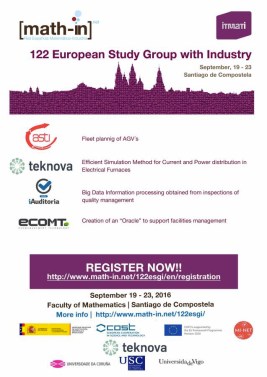
122nd European Study Group with Industry, Spain

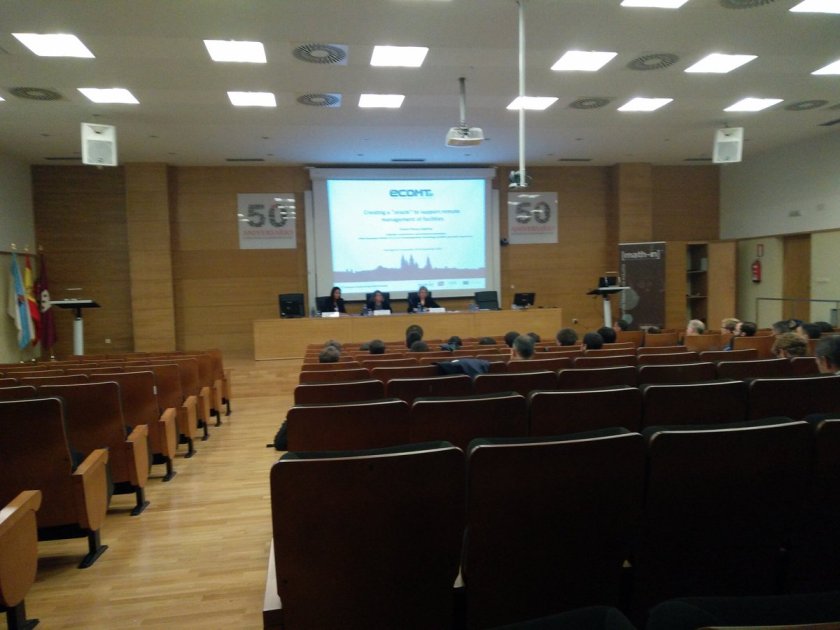
122_esgi_cost The 122 European Study Group with Industry (ESGI) was held from 19th to 23th September 2016 at the Faculty of Mathematics of the University of Santiago de Compostela (USC), thanks to the collaboration between the Spanish Network for Mathematics & Industry (math-in) and the Technological Institute for Industrial Mathematics (ITMATI).

Initiated in Oxford in 1968, Study Groups with Industry provide a forum for industrial scientists to work alongside academic mathematicians on problems of direct industrial relevance. They are an internationally recognized method of technology and knowledge transfer between academic mathematicians and industry.

The success of the ESGI is the unique format which has been copied around the world, in which mathematics community works on reduced groups to study problems, proposed by industry. These problems are presented from any economic sector thanks to the Mathematics’ transversally. The objective is to present the capabilities of Mathematicians and the applicability of Mathematics in a large part of the challenges and needs of the industrial, bringing small, medium and large companies a technology with great potential, with highly qualified researchers and that does not require large investments to use.

This simple format has proved its value again and again: companies from diverse industries have benefited from the insights gained through mathematical analysis of their problems, while mathematicians with diverse interests have benefited from the exciting research opportunities presented by unsolved problems with practical significance.

Therefore, collaboration between industry experts and researchers is a key to addressing technological innovation problems into a mathematical successful. The realization of ESGI contributes to the promotion of mathematics and awareness of companies to use Mathematics to improve their processes.

GOALS:

o to find solutions and insights into existing industrial problems;

o to establish lasting and productive working links between applied mathematicians and industry;

o to propose new lines of research based on business challenges;

o to reinforce the importance of mathematics in industry and to open new jobs of mathematical profile in companies; and

o to stimulate greater awareness in the wider community of the power of mathematics in providing solution paths to real-world problems.

INDUSTRIAL PROBLEMS:

In the 122 ESGI four problems were presented:

PROBLEM 1: Fleet planning of AGV´s

o Academic Coordinator: Julio González Díaz. Affiliated researcher of ITMATI, Assistant Professor at the Department of Statistics and Operations Research (USC).

o Business Coordinator: Jesús Enrique Sierra García. Academic and Scientific Relations Manager, Asti.

o Specialist: Juan José Salazar González. Professor of Statistics and Operations Research, University of La Laguna (Tenerife).

o Description: The AGVs (automatic guided vehicles) are automatic vehicles for transporting loads in production environments. AGVs in intralogistics systems are not used individually, but fleets of AGVs. The plant system sends commands indicating the source station and the destination station to a monitoring system fleet (SCF). The SCF assigns each order to an AGV within the fleet of AGVs. Currently, this assignment is not optimal and occurs locks and waiting periods that limit the productivity.

o Further information: 122 ESGI (problem 1).

PROBLEM 2: Big Data Information processing obtained from inspection of quality management.

o Academic Coordinator: Rosa Crujeiras, Affiliated researcher of ITMATI, Associate Professor at the Department of Statistics and Operations Research (USC).

o Business Coordinator: Hugo Caridad Cordeiro, CEO iAuditoria.

o Description: Companies must address compliance relating to food safety, prevention of occupational hazards and environmental quality legal and contractual requirements. To do so, within the control and monitoring methodologies is conducting inspections and / or audits in order to verify compliance with them. Generally, these inspections and audits are collected as mere compliance with the requirements without companies to allocate time and resources to analyzing them. iAuditoria is an ICT tool that solves this problem and that in any case wants to go further and deal with predictive models generated from the results of such inspections and audits the possibility of facing situation of food crises, accidents or environmental disasters.

o Further information: 122 ESGI (problem 2).

PROBLEM 3: Efficient Simulation Method for Current and Power distribution in Electrical Furnaces

o Academic Coordinator: Mª Pilar Salgado Rodríguez. Affiliated researcher of ITMATI. Associate Professor at the Department of Applied Mathematics (USC).

o Business Coordinator: Svenn Anton Halvorsen. Senior Researcher of Applied Mathematics. Teknova AS.

o Description: Mathematical modelling has successfully been applied for various aspects of metallurgical processes. Nevertheless, due to all complexities in the processes, the design and operation of smelting furnaces are still to a large degree empirically based, and several process variations are not properly understood. One identified knowledge gap is an accurate understanding of the effects of 3-phase alternating current, including how the associated power distribution governs the chemical reactions and temperature distribution. An efficient method for computing 3-phase current paths and power distribution is a required step to close this knowledge gap. Previous simulations within metallurgy have often applied direct current (DC), to study large, 3-phase, smelting furnaces. Such DC simulations are valid for “only one instant of time” and it is not straightforward to interpret the results for real furnaces. We have shown that an approximate harmonic solution for 3-phase alternating currents (AC) can be described as a superposition of three DC solutions, taking the phase shift between the three electrodes into account. This simplified AC-model will be presented at the IFAC MMM symposium, Vienna, 31 August – 2 September 2016.The ESGI shall focus on comparing the simplified model with full AC 3-phase simulations including electromagnetic induction. The simplified AC approximation is valid for small furnaces. We now want to clarify how well it works for large ones.

o Further information: 122 ESGI (problem 3).

PROBLEM 4: Creation of an “Oracle” to support facilities management

o Academic Coordinator: Javier Roca Pardiñas Affiliated researcher of ITMATI. Associate Professor of Statistics and Operations Research (University of Vigo).

o Business Coordinator: Pedro Perez Gabriel, Managing Director of Eco-management Technology S.L. (EcoMT)

o Description: EcoMT is an ICT company dedicated to implementing solutions for monitoring and remote facilities management based on expert system technology and applied to plants responds to a concept of “multisite” with particular characteristics: relative simplicity, high number of similar facilities and limited financial and technical resources for operation and maintenance. We have developed a platform for remote management and monitoring (OTEA) which aims to make a comprehensive management of the different facilities, its latest developments place it in the field of  expert systems, with the ultimate goal to be able to make intelligent decisions to manage the facilities which controls (air conditioning, lighting, water treatment systems, …) without human intervention and low cost of implementation. EcoMT is an ICT company dedicated to implementing solutions for monitoring and remote facilities management based on expert system technology and applied to plants responds to a concept of “multisite” with particular characteristics: relative simplicity, high number of similar facilities and limited financial and technical resources for operation and maintenance. We have developed a platform for remote management and monitoring (OTEA) which aims to make a comprehensive management of the different facilities, its latest developments place it in the field of expert systems, with the ultimate goal to be able to make intelligent decisions to manage the facilities which controls (air conditioning, lighting, water treatment systems, …) without human intervention and low cost of implementation. Today, there is ample historical data sets (more than 5 years, more than 1800 installations each with a number of variables treated between 100 and 300) of the behaviour of different facilities (air conditioning and lighting) in multiple geographic locations and in many cases they could respond to patterns (hidden or view).Systems that are tele-management, especially air conditioning systems are designed with deterministic rules with the aim of achieving certain conditions of thermal comfort for users, however the actual performance of facilities depends on variables with a strong probabilistic nature such as be: external temperature conditions, the occupation of the premises, maintenance interventions …What is sought is the creation of an “oracle” that can give answers and generate rules of operation for the user issues advanced no demands and consultation of the expert is not necessary. To do this, and some steps (2014/2015) were given using neural networks, Bayesian networks, regression … obtaining predictive algorithms that generate risk maps that provide information about which facilities have a higher risk that comfort conditions are not met in certain circumstances and operating environment. The initial idea we have is that the wizard (oracle), fed and trained with the historical database, incorporating various modules (algorithms) that allow you to master specific topics within that area. In the future the “oracle” will evolve into “genius” or “sovereign” so that no human intervention was required to manage the facilities on which applies. In this new phase it is intended to at least choose to offer the best performance algorithms to implement in the oracle according to the type of data that we have and facilities for which they apply.

o Further information: 122 ESGI (problem 4).
css16a-wcaagsrwPARTICIPATING ENTITIES AND ENTERPRISES:

o Asti

o iAuditoria

o Teknova

o EcoMT

SCIENTIFIC COMMITTEE

o Cao Abad, Ricardo. Professor of Statistics and Operations Research. University of A Coruña. Affiliated researcher of ITMATI.

o Parés Madroñal, Carlos. Professor of Applied Mathematics at the University of Malaga and Vice-President of the Spanish Network for Mathematics and Industry (math-in).

o Roca Pardiñas, Javier. Associate Professor of Statistics and Operations Research. University of Vigo. Affiliated researcher of ITMATI.

o Rubio García, Julio. Professor of Computer Science and Artificial Intelligence. University of La Rioja. Member of math-in.

o Salgado Rodríguez, Mª Pilar. Associate Professor of Applied Mathematics. University of Santiago de Compostela. Affiliated researcher of ITMATI.

ORGANIZING COMMITTEE

o Castro Novo, Adriana. Technology transfer and innovation manager. ITMATI.

o Gayoso Taboada, Rubén. Manager. ITMATI.

o Prieto Aneiros, Andrés. Associate Professor in the Department of Mathematics of the Faculty of Computer Science. University of A Coruña. Affiliated researcher of ITMATI.

o Sampayo Fernández, María Fe. Translator or technology. Math-in.

CALL FOR COMPANIES

This year, for the first time, an open call for companies who want to present an industrial problem in 122 ESGI were carried out.

Further information: http://www.math-in.net/122esgi/en/call

FURTHER INFORMATION AND SCHEDULE: http://www.math-in.net/122esgi/

REPORT AND PHOTOGRAPHS: http://www.itmati.com/en/122-esgi-week-free-mathematics-solve-industrial-problems

Featuring: Dr Claudia Nunes and Dr Rita Pimentel

Thanks to the COST Action TD1409, MI-NET, we had the opportunity to participate on a short term scientific mission (STSM) in the Norwegian University of Science and Technology (NTNU), Trondheim. During our stay, we worked with Dr. Verena Hagspiel, from NTNU, and with Dr. Kuno Huisman and Prof. Peter Kort, both from Tilburg University.

Our collaboration with these researchers is not new. We have been working on several projects, in particular, applying real options theory to decide when and how much a company should invest. Lately, we have been exploring the technology adoption problem, where a firm can adopt a new technology at any time, paying some irreversible cost. The later the firm adopts a new technology, the higher quality the product has, so the higher the demand for this product will be. But after this burst in the demand, demand tends to decrease along time. This is, for instance, the typical behavior of consumer demands for gadgets, like mobile phones.

This type of problems is very important to industry that seeks to know which conditions they should invest in a new technology.

Working in a team as we have been working in NTNU is very fruitful. We joined our skills: in one hand, our background is Mathematics, and, on the other hand, Dr. Verena, Dr. Kuno and Prof. Peter have a strong background in Economics. Furthermore, NTNU has several collaborations with companies. This opportunity of working with them is very important for us. They share with us the knowledge and experience from companies. In the resolution of the problems, the inputs from the both sides – Mathematics and Economics – can complement each other leading to great results.

Surely, this stay really boosted our research and the fact that we were able to work as a team of five made possible to achieve our goals faster than if each one of us was working alone in their home institutions. The STSM is a measureless contribution to the growth of research on Industrial Mathematics!

s_cnunes


Dr Claudia Nunes is an Associate Professor at Instituto Superior Técnico da Universidade Técnica de Lisboa, Portugal. Her area of research focuses on stochastic processes and their applications to telecommunications and finance.


rpimentel


Ms Rita Pimentel is a PhD Student at  Instituto Superior Técnico da Universidade Técnica de Lisboa under the supervision of Dr Claudia Nunes. Rita’s interests is in statistics and stochastic processes.


Industrial Workshop AICA 2016: Logroño (Spain), 21st June 2016

logrono_aica2016

This was the third AICA (“Aplicaciones Industriales del Álgebra Computacional”) Industrial Workshop organized by the Red-EACA. This third AICA Industrial Workshop is the natural continuation of those organized in the Universidad Complutense de Madrid (2013) and the Universidad de Granada (2011). It was held at the Centro Científico y Tecnológico of the Universidad de La Rioja (Logroño) on June 21st, 2016 with partial support from the Ministry of Economy and Competitiveness, under the Acciones de Dinamización “Redes de Excelencia” MTM2014-56142-REDT.

AICA is a short industrial workshop that focuses on transfering knowledge from mathematical subjects close to the interests of the Red-EACA. The scientific committee of the Red-EACA acts as scientific committee for this industrial workshop.

The meeting was locally organised by the Computer Science team of Universidad de La Rioja (Spain). 40 participants from 4 countries attended this event. The programme included 6 plenary talks:

2013JB

“Multivariate Adaptive Splines: Theory and Applications”,  Bert JüttlerInstitute of Applied Geometry, JKU – Germany


clemens-rocks-low

“Runtime Verification of Real-Time Properties of JamaicaVM” [pdf available here], Clemens BallarinInstitut für Informatik, Technische Universität München – Germany


1c6cb76

“Application of Autoregressive Linear Models. Production Forecast in Wind Farms”, César González, Deimos- Spain


“Application of Multisensor Fusion Algorithms. Vessel Traffic Service”, Irene López, Deimos – Spain

3b993e4


“Data Fusion Algorithms for Low Cost Navigation Systems”, María Campo Cossío, CTC -Spain


image003


“Some applications of Computer Algebra to Transportation Engineering”, Eugenio Roanes, Universidad Complutense de Madrid – Spain


In addition to the plenary talks,a poster session was held during the workshop. Finally, the last event of the workshop was a discussion panel with companies of the region and EACA researchers.

We grateful acknowledge (COST Action TD1409) MI-NET‘s support.

www.unirioja.es/AICA2016/


Numerics for Geophysics Problems

Screen Shot 2016-07-29 at 13.20.08.png
This workshop took place from 26th to 27th May 2016 at BCAM-Basque Center for Applied Matrhematics
This workshop counted with 30+ researchers from Academia and Industry. It was mainly oriented to the development of state-of-the-art numerical methods for geophysical applications.
Industrial presentations showed challenging electromagnetic, acoustic, and fluid flow geophysical problems both in the areas of hydrocarbon exploration and in mining. State of the art numerical methods were presented by renowned professors as partial solutions for those industrial problems. The use of high performance computing (HPC) platforms and the related implementation issues were also largely discussed during the meeting.