Short Term Scientific Mission – Dr Liebrecht

From March 6 to 12, Michael Liebrecht visited Prof. Esa Räsänen at the Tampere University of Technology (Tampere, Finland).
His Short Term Scientific Mission was funded by the COST Action „Mathematics for industry network (MI-NET)“ to establish a colloboration between Prof. Räsänen’s group and MathConsult on the field of computational condensed matter physics.
The visit was mainly planned as a workshop to exchange knowledge about low-dimensional electronic systems and their experimental setups, to get a basic understanding of the involved physics as well as to talk about the most suitable methods to deal with the numerical challenges in describing them. 
We made such good progress that it was even possible for us to start calculating band structures of Kekulé-distorted molecular graphene flakes of various different sizes experiencing a homogenous magnetic field.

rho_L07_K01.00_B00.00


In the figure, the electron density of a regular molecular graphene flake is shown in comparison to a Kekulé-distorted one.


dos_L07_K01.20


In the figure, the density of states of a regular Kekulé-distorted graphene flake is shown as function of the magnetic field.


The visit was such a big success that the collaboration will be further intensify, leading to several joint scientific publications.

III Iberian Modelling Week, April 11-15, 2016

Unknown's avatarECMI

banner_en

From April 11 to April 15, 2016, the III Iberian Modelling Week will take place at the Faculty of Sciences, University of Porto. This edition is organized by the Department of Mathematics, Faculty of Sciences, University of Porto in collaboration with the Portuguese Network for Industrial Mathematics (PT-MATHS-IN) and the Spanish Network for Mathematics and Industry (math-in).

The Iberian Modeling Week is an itinerant event that takes place alternately between Portugal and Spain, taking place each year in a different higher education institution. After Coimbra and Santiago de Compostela, Porto is now the city chosen to host this third edition.

The III IMW is funded by COST Action TD1409, Mathematics for Industry Network (MI-NET).

View original post

Modelling Camp – International Center for Mathematical Sciences, Edinburgh


ICMS_CAMP

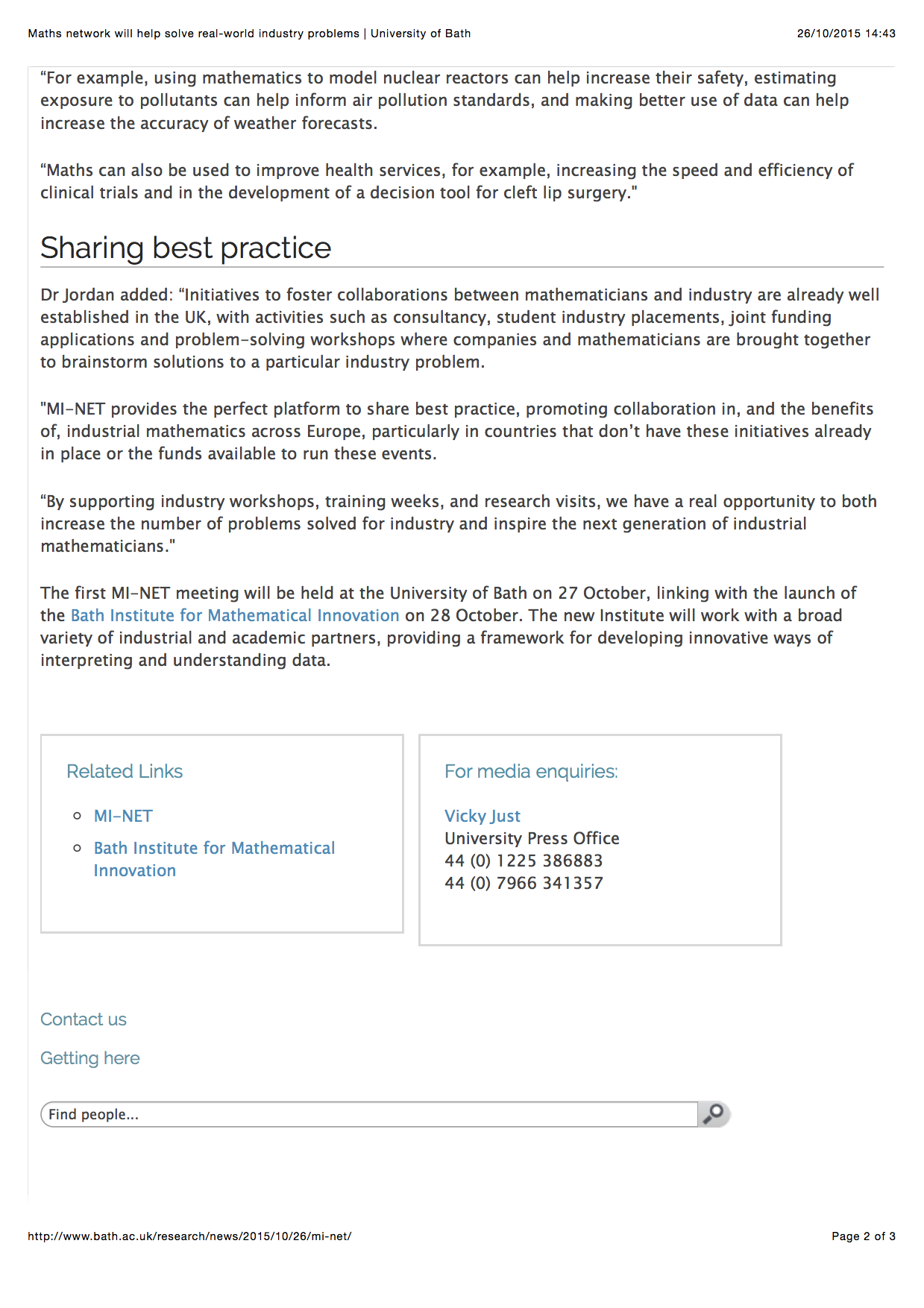
In March 2016, ICMS ran a Modelling Camp. The students were from the Maxwell Institute CDT and public applicants. Public Applicants came from across Scotland, North of England and Europe. The MI‐NET COST Action TD1409 funding enabled us to be meet the bulk of the travel and accommodation costs of the non‐local students as well as the costs of the instructors. The MI‐NET funding also contributed to the local catering costs.

30 PhD students considered 4 problems:

1. Forecasting periods of maximum electricity consumption ‐ societal/economic impact

2. Brewing Filter Coffee ‐ economic/societal impact

3. Bottle testing ‐ economic impact: reduction of costs

4. Optimal Resource Allocation across Advertising Budgets

Each problem team had an allocated instructor, who gave an initial presentation on the problem, and provided guidance throughout the week. The advertising budget problem was also support by the company Skyscanner, who set the problem in conjunction with Paul Johnson (University of Manchester) and provided data and guidance throughout the week. Following a structure akin to the Study Groups, students formed into small teams after a morning listening to the problem description.

The following days predominantly involved group working under the guidance of the problem instructors. In addition there was a plenary talk by Tony Mulholland (University of Strathclyde).

Students gave regular presentations/updates on progress throughout the week:

Problem Descriptions and Results

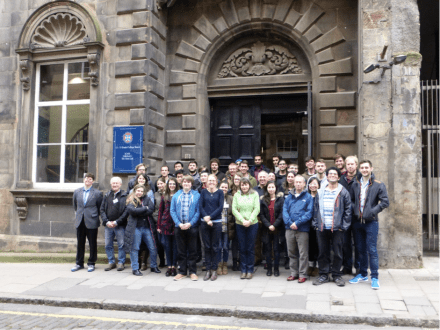
Students gave presentations on their work on the last day of the workshop. They were asked to recap the problem, outline their approach, detail any results and highlight future work options.

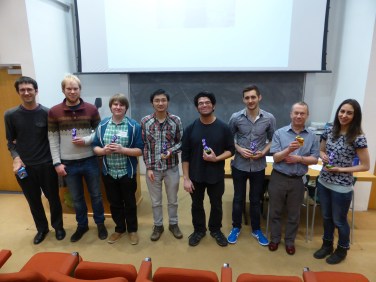
Electricity
Electricity.JPG

  • Problem:

Electricity companies wish to reduce energy consumption during peak times in the winter period. Electricity companies, add a surcharge to the three half‐hour periods of highest energy consumption (triads) retrospectively. These `Triads’ must be spaced by at least 10 days. Electricity companies issue warnings. Aim is to reduce the number of false warnings to electricity customers, whilst ensuring the triads are captured.

  • Approach and Results:

The group originally considered the Secretary Problem, and extension of the Secretary Problem using a numerical method. With the insight this provided they moved to an alternative method which used historical weather data and forecasting inputs. They created a mathematically justified algorithm which resulted in issuing fewer warning than the electricity company.

  • Future Work:

The group highlighted, the triad spacing, forecasting uncertainty and warnings producing negative feedback as areas for algorithm refinement.

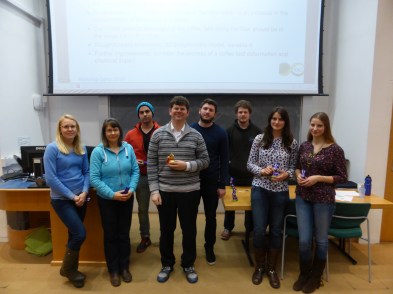
CoffeeCoffee.JPG
  • Problem:

World‐wide there is a large and expanding market for filter coffee machines. This project focussed on modelling the extraction of coffee within a coffee machine, with the eventual aim of designing coffee machines that can robustly produce good coffee. Experimental data on coffee extraction was provided.

  • Approach and Results:

The team developed a basic model, which for a given geometry of the coffee bed predicts the quality of the coffee. The model showed more coffee is extracted at the top of the filter rather than at the bottom due to the lower pressure and lower velocity a decrease in the angle of inclination of the filter leads to an increase in the concentration of coffee in the solution a prediction that the height of the coffee bed along the filter should be in the range 0:8 < h < 1 cm

  • Future Work:

The team suggested that straightforward extensions of that weeks’ work could include 3D axisymmetric model, variable h. Further improvements to the model could consider the process of a coffee bed deformation and chemical impact.

Bottle Testing
BottleTesting.JPG

  • Problem:

A company’s quality control of the containers it produces involves testing for leaks. The standard initial test is noisy: about 8% fail, but only about 0.4% are judged to fail a secondary test. How can one bring down the false negatives without introducing too many false positives?

  • Approach and Results:

The team considered three different models for the existing problem, a Deterministic Model, a Statistical Model and a Stochastic Model. The team’s method cut the probability of accepting a bad bottle from 3/2000 to 1/2000; and, cut the probability of rejecting a good bottle from 163/2000 to 84/2000. The approach cannot eliminate the probability that the good bottle is rejected (or that a bad bottle is accepted) but the team’s model was shown to be more accurate than the existing model used by the company.

  • Future Work:

The team suggested that the statistical and stochastic model should be tested further with the input of real data.

Advertising Budgets

  • Problem:AdvertisingBudgets.JPG

How to allocate resource to different channels for advertising budgets. Background models for investment on financial markets were highlight
ed, and an existing industry model was provided. Constraints regarding increases/decrease
s in each channel were provided and a constant budget was assumed.

  • Approach and Results:

With the support of the Skyscanner attendees, the team consider a series of modifications to the existing model. This included consideration of linear, log linear and quadratic model variations. The team were provided with real data and were able to assess the percentage error for the various approaches. The refinements suggested by the team appeared to reduce the error substantially and provide a better fit to the real data.

  • Future work:

Items for further work suggested by team were changing the boundaries, adding noise to the model, allocated vs spent, risk, incorporate more data and experimenting to validate the model.

After deliberation by the instructors and ICMS Scientific director, David Abrahams, and MIGSAA Deputy Director, Dugald Duncan, the prize was awarded to the Electricity Problem Team. All teams were commended on their efforts and team working throughout the week.

Feedback and Future Modelling Camps

The modelling camp has received really strong feedback with all the students who responded to the questionnaire confirming that they had found the modelling camp useful and would recommend other students participate in a similar event. Students seemed to particularly enjoy the experience of working in teams on a shared problem. Several highlighted listening to the final presentations and seeing how each team had coped with their specific problem as very instructive.

Additionally students/instructors were asked to make suggestions for improvements.

Compiled comments/recommendations from the feedback and organisers observations are provided below.

Role of the Facilitator

On the first day during team forming some of the problems proved more popular than others. Thankfully one of the modelling camp facilitators was able to resolve this and allocate people across the four problems without too much dissent. Additionally, most of the instructors/facilitators had significant experience of study groups which meant that the team‐working activities required very little additional support. There was only 1 instructor who did not have much experience of these type of activities and he was able to gain support from the others. We’d recommend that the bulk of the instructor/facilitator roles are undertaken by people with relevant experience.

 Timing

Scheduling of events is always tricky and we will never please everyone. It transpired that there was a conflicting deadline for many of the local students which effected their ability to fully enjoy the week. Future events (especially if we follow a similar model with a significant proportion of local students) should be mindful of these clashes.

 Team Sizes

The team sizes ranged from 6‐10. Feedback varied for this. Some students recommended that group sizes be limited to 3‐4 whilst others felt the group sizes were about right. As one of the aims was to prepare students for Study Groups where the study groups are significantly larger it would be wise not to make the groups too small, however it may be wise to cap the upper limit at 10.

Future Modelling Camp and Funding

ICMS would be keen to hold further Modelling Camps. An annual event has been recommended. It also been recommended that these could be complimentary to modelling camps run at Oxford University. This modelling camp benefitted from funding from MI‐NET, MIGSAA CDT and Skyscanner. As a result we were able to support the bulk of the student costs. ICMS would plan to submit a proposal to MI‐NET to support a 2017 Modelling Camp.

Advance Material

Several students commented that they would have liked to have had material in advance regarding the problems. This will be considered, but there are disadvantages, it puts extra preparation on the instructors and it may make the distribution of people across teams more difficult if people have developed strong preferences.

Company Links

The Modelling camp proved an excellent forum/opportunity to establish links/contact with local Edinburgh company, Skyscanner. Students really seemed to appreciate having a company’s perspective. Skyscanner also commented that they found the modelling camp an excellent way of finding out different perspectives and exploring ideas, indeed we understand that one of the PhD helpers at the modelling camp has subsequently undertaken a placement at the company. Future modelling camps should aim (where possible) to have continued company involvement.

Links to Study Group

All participating students were encouraged to sign up to the 2016 Study Group at Durham. The timescales between the modelling camp and study group were relatively short, so there was enough notice for some of the students to be able to make the time commitment. Future Modelling Camps should make students aware of the Study Group timings and opportunities well in advance.


“a very enjoyable experience for me, and very well run. I would certainly be very happy to participate in future modelling camps and recommend them to my colleagues/students.” – Instructor

“I learned a lot from this Camp and I had a lot of fun as well.” – Student


XI Forum Mathematics-Industry

itmati_logoXI Forum Mathematics-Industry 

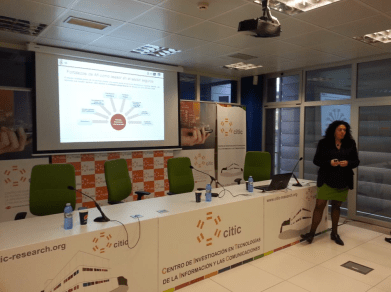
The XI Forum Mathematics-Industry was held on 12th February 2016 at the Conference Room of the CITIC (Research Centre on ICT) in A Coruña. The Forum was organized by groups of applied mathematics, statistics and operations research from the three Galician universities that are consolidating their efforts to transfer technology to industry and the productive sector, via the Technological Institute for Industrial Mathematics, ITMATI.

Mathematical models, statistical techniques of artificial intelligence and big data can help the industry to meet their daily challenges: from maximizing production to offer a more personalized service to its customers. Its use is not only limited to large companies but can also be applied, due to its low cost, to SMEs (small and medium-sized enterprises).

In the XI Forum Mathematics-Industry different success stories were presented. In some of them algorithms were used for financial analysis; in others, to predict the behaviour of digital content readers; and there were also examples of remote management of scattered locals, and optimization of production processes. Often, “most of these success stories are the result of collaboration between different companies and groups of Applied Mathematics, Statistics and Operations Research of the three Galician universities,” explains Carlos Vázquez, Professor of Applied Mathematics at the University of A Coruña (UDC) and affiliated researcher of ITMATI and coordinator of this XI Forum.

  • Artificial intelligence and data processing techniques help to manage a large network of branches reducing costs, consumptions and personal with minimal resources, “like the electrical system of a country is managed”.
  • A study by the University of A Coruña on the behaviour of elpais.es web users has allowed developing a model of consumer behaviour with applications in different areas.
  • The use of simulation algorithms reduces the time of computing the financial risk analysis.

TALKS: 

  • ITMATI, a centre for promoting transfer and innovation. 

Mr. Rubén Gayoso Taboada, Executive Manager of ITMATI 

The “Technological Institute for Industrial Mathematics (ITMATI)” aims to become a centre of research, innovation, and technology transfer of international reference in the field of Industrial 

Mathematics. This consortium has been an important milestone of sharing resources among the three Galician universities, University of A CoruЦa, University of Santiago de Compostela and University of Vigo. ITMATI promotes the transfer of mathematical technology providing effective and agile answers to the needs of businesses, industries and government in the fields of Applied Mathematics, Statistics and Operational Research. 

  • Collaborative project in the field of industrial mathematics: University-Business AFI/UDC/ITMATI. 

Mrs. Iratxe Galdeano, Partner AFI Mr. JosО Antonio GaitmatircТa RodrТguez, ITMATI/UDC 

A Collaborative project developed between ITMATI res
earchers at the Department of Mathematics of the UDC and AFI to accelerate the comprehensive risk management in the insurance business by- GPUs- CUDA technology. Within this comprehensive framework, it had been developed the prototype CudALM-Afi for joint management of the module of asset and liability – ALM -. This prototype has been concurrently implemented using graphics processors (GPUs), which allows the use of thousands of processors and a higher bandwidth memory access, thereby obtaining significant savings in computation time with respect to other existing tools in the market. The platform library developed in C ++, leverages the capabilities of the GPU while keeping the characteristics of an object-oriented language features.

  • Statistical classification of users according to their behaviour in the access and use of digital content in multiplatform. 

Mr. Jorge TomО Hernando, Director of Information Systems Architecture and Quality Assurance. PRISA Technology. Mr. JosО Antonio Vilar, ITMATI/UDC 

The Research group MODES of the UDC, as part of the research project carried out with PRISA Digital “Intelligent Technologies for Access and consumption of digital contents in platforms Behaviour” with Acronym Digital HUB, developed an innovative methodology for users of a web portal based on their browsing behaviour. The proposed solution considered cluster analysis techniques based on a measure of dissimilarity between sequences of categorical data that takes into account their time evolution. This proposal enables a proper interpretation of the cluster solution and, unlike other lines in literature based on assuming and estimating probabilistic models for each cluster; the method is free to estimate input parameters and has been successfully tested in simulation studies providing good results. The tool, programmed in open software, faces the problem of selecting the number of clusters and includes graphs for displaying behaviour patterns characterising each cluster. Getting taxonomy of users was one of the objectives of the project to the extent that facilitates personalization strategy and content publishing, advertising and e-commerce. 

  • Expert systems for remote management of infrastructures that demand energy. How to measure without measuring tools and how to manage without managers. EcoMT. 

Mr. Anxo David FeijЧo, General Manager, EcoMT 

The “data mining” and artificial intelligence solutions (expert systems etc.) applied to remotely-managed and monitored multipoint installations open possibilities for new management models which will reduce operating costs, improve competitiveness and comfort for customers and workers and help reducing energy demand and CO2 emissions associated with the company. The development and implementation of algorithms and mathematical models to work with patterns and predictive models reduce implementation costs by monitoring and optimizing the resources devoted to managing the “multisite” facilities, thereby minimizing the barriers to implement remote systems management in small and medium-sized enterprises (SMEs) in which the investment capacity for activities that are not “core business” is very limited 

  • Centro de Innovación Aeroespacial de Galicia 

Mr. JosО Antonio VilЗn, Commissioner Vigo TecnЧlogico, UVIGO. 

In this presentation the new “Centro de InnovaciЧn Aeroespacial de Galicia (CINAE)”, its constitution, patterns, resources, installations and objectives were presented. 

  • Sim4Lean: Development of manufacturing models integrating simulation and computer tools and lean Manufacturing. 

Mr. Daniel Prieto Renda, Director of Organization, Soltec Ingenieros 

Soltec Ingenieros in collaboration with the Research Group on “IngenierТa de procesos de fabricaciЧn” of the UVigo have jointly developed a tool (S4L-Sim4Lean), to analyse manufacturing models integrating computer simulation tools with Lean Manufacturing philosophy applied to decision making on different production strategies. 

  • Industry 4.0 and Technology Transfer to SMEs (first steps). 

Mr. JosО Manuel Iglesias Vilas, CEO Cetus Group, and President of ClЬster de la madera y del diseЦo de Galicia 

Statistics, simulation, automation, etc., are features that represent the concept of Industry 4.0, aimed at more efficient management of internal capabilities and focused on adaptability and fast response to emerging trends. To achieve the maximum customization based on maximum standardization; analytical methods of data are an essential tool. In the “Cluster de la madera y del diseЦo de Galicia”, we are taking the first steps to integrate these processes and disseminate in our industrial environment and the entire value chain of our industry. 

  • Presentation of the masters: Master in Industrial Mathematics (M2i) and Master in Statistic Techniques. 

Mrs. Elena Vazquez Cendon, ITMATI/USC Mr. JosО Antonio Vilar FernЗndez, ITMATI/UDC 

PARTICIPATING ENTITIES AND ENTERPRISES 

o AFI 

o Centro de Innovación Aeroespacial

o CETUS Group

o Clúster de la madera y del diseño de Galicia 

o Grupo PRISA

o EcoMt 

o Soltec Ingenieros

ORGANIZER: Technological Institute for Industrial Mathematics. Co- organizer COST Action Mathematics for Industry Network (MI-NET).

This activity was financed by the COST Action Mathematics for Industry Network  financed by the European Cooperation in Science and Technology 

Cost is supported by the EU Framework Programme Horizon 2020

Outreach and Science Communication – The Mediterranean Science Festival

msf_logo


Why do we grow old? …Should we get vaccinated?…Why isn’t everyone left-handed?…What is the world’s oldest computer?…Why do leopards have spots?

The 1st Mediterranean Science Festival, was organized for the first time in Limassol, Cyprus, from 3-6 December 2015.
Following the motto “Discover Science in our Everyday Life!”, the Mediterranean Science Festival was aimed at young children, students, and people of every age who love and are interested in science, technology, and innovation. In four days, 9,300 visitors, of whom more than 4,000 were children, discovered our fascinating world through 140 original and entertaining activities which included a very large interactive exhibition, live experiments, workshops, training games, theatrical performances, screenings, talks and lively discussions, by distinguished Cypriot, and foreign scientists and educators.

The MSF was organised by the non-profit educational organisation SciCo-Cyprus and the Research Promotion Foundation,  with the co-organisation of the Youth Board of Cyprus, and the participation of the educational and research community of the country as well as a multitude of organizations, institutions, non-governmental organizations, associations, etc. Dr Katerina Kaouri, MC member of MI-NET, is a Co-founder and Co-Director of the Mediterranean Science Festival and of SciCo Cyprus.


SciCo
organises and supports events and activities in science communication, informing and educating the public about new scientific and technological developments via innovative interactive tools and entertaining methods.

Here is a short video that captures the (festive) atmosphere at the Mediterranean Science Festival.

Note that the entrance was free, thanks to 90 enthusiastic volunteers.

Industrial Mathematics – Current Practices

Ellen Murphy

Dr Ellen Murphy, Commercial Research Associate, Bath Institute for Mathematical Innovation
Using mathematics to solve industrial problems has benefits for everyone; mathematicians get to wrap their heads around interesting and challenging problems, and industrialists gain access to knowledge that would otherwise be unattainable. That was why I was so glad to be involved in the MI-NET Workshop, held here in the University of Bath in October 2015.  Mathematicians from all over Europe and beyond gathered together to share their experiences of working with industry and to help researchers from countries that traditionally don’t have a history of industrial collaboration.

One mathematician with a wealth of experience solving industrial problems is Professor Chris Budd OBE. His talk on Student Projects with Industry demonstrated the variety of problems that mathematicians can expect to encounter when they work with industry. Chris talked about the well-known examples of power generation and finance but also lesser known ones like creating art or even using crowd dynamics to escape a lecture hall. I’m sure there are times when we’d all like to know how to do that!
The following day I snuck into the Working Group for Education and Training. Having been both a participant and an organiser of student mathematical modelling workshops in Ireland, it was exciting to hear the discussions on how to organise them and similar activities in other MI-NET countries. It can be challenging for these first-timers to secure funding, which is why these working groups are so important – to listen to people’s concerns, disseminate the appropriate information and to then refine the process accordingly.
The most valuable part of the workshop for me was making new contacts that would be nearly impossible otherwise. Over the two days I met researchers from Sweden, Bosnia and Herezgovina and Cyprus and met old friends from Ireland, the UK and Spain. And who knows, maybe I’ll see some of them again on a Short-Term Scientific Mission!


Industrial Mathematics – Current Practices

Dr Katerina Kaouri, MI-NET Management Committee Member, Expert Scientist/Research Fellow, Department of Electrical Engineering, Computer Engineering 2006-01-01 17.51.33and Informatics, Cyprus University of Technology

The workshop “Current Practice in Industrial Mathematics” was organized by MI-NET, with the lead of Dr. Hilary Ockendon, on the 27th of October 2015, at the University of Bath. The aim was the creation of an open forum in which various methodologies for mathematicians working with industry in different countries would be presented and discussed, and enabling a fruitful discussion that would lead to the exchange of best practices, and ultimately to a better connection of academia and industry across the EU.

After opening remarks by Dr Hilary Ockendon (University of Oxford), in Part I “Student Centered Activities” Prof. Dietmar Hoemberg from the Weierstrass Institute for Applied Analysis and Stochastics, in Germany, outlined three EU funding mechanisms for PhD students and gave more details about the European Industrial Doctorates (EID) scheme, one of the Marie Curie Actions.

EIDs are joint doctoral training projects between an academic institution and a company, which are established in two different EU Member States or associated countries of the EU. Prof. Hoemberg presented the successful example of MIMESIS, an EID network in which he was involved and which funded 8 PhD students in Maths and in Materials (budget: 2.1 Million Euros). He strongly recommended the EIDs as a very good method for academics to build bridges and long-term collaborations with industry and for gaining easy access to the industry’s technical expertise.

Subsequently, Kate Powers, a PhD student, and Prof. Chris Budd OBE from the University of Bath outlined various successful methodologies that the university has developed in order to collaborate with industry.  Kate Powers spoke very positively about her two placements with industry (11 weeks) when she was a MMath student under the guidance of Prof. Budd. She emphasized that the experience enabled her to see what doing a PhD entails, network and get acquainted with a variety of applications of mathematics in industry. Prof. Budd and Kate Powers described in detail another successful academia-industry tool devised by the UoBath, the Integrative Think Tanks (ITTs). ITTs are weeklong workshops where about 60 academics, students and industrialists work together. They act as forums that help researchers better understand the challenges facing industry and formulate them into mathematical problems that can be addressed through PhD projects or industrial placements. They attract companies from a wide range of fields (telecoms, aerospace, power generation, mining, oil), including household names such as Unilever, London Transport, EDF Energy, etc. The ITTs also involve the newly-founded Bath Institute for Mathematical Innovation (IMI), who provide consultancy services to industry. (MI-NET’s Chair, Dr Joanna Jordan is the Manager of IMI).

Prof. Budd also mentioned three other mechanisms that enable students to work with industry: i) CASE Studentships for PhD students, a UK-wide tool (ii) Internships, one-year undergraduate student placements  as part of the UoBath Mathematics degree (iii) MSc projects, as part of the MSc in Modern Applied Mathematics at the UoBath – either 3 or 6 months duration.

Continuing, in Part II “National Networks”, Prof. Peregrina Quintela Estevez President of the Spanish Network for Mathematics and Industry presented the math-in network. The math-in network consists of more than 40 research groups with more than 440 researchers and technical staff based across Spain. Prof. Estevez relayed that the diversity of locations and thematic areas offered by the network has been very appreciated by the industrial clients. Their way of working include developing and maintaining  close relationships with the companies.

They have designed and constantly update a supply map, a depository of case studies in 23 industrial sectors, as those are defined by the EU. A sophisticated search engine allows easy identification of the required expertise. Also, math-in identified industrial needs in Spain by running a survey with 8000 companies in the country, active across all industrial sectors. They are also operating a technology transfer office of the math-in network at the University of Santiago de Compostela. The technology transfer office acts as a one-stop-shop for companies, that is the company brings a problem, the office identifies which research group can solve it and puts the researchers and the company in touch. The contracts are between the academic institution and the client company and math-in oversees the quality control of the process.

Dr Robert Leese, Director of the Smith Institute for Industrial Mathematics and Systems Engineering, in the UK presented the activities of the Smith Institute. Smith Institute is an independent company, working in close contact with universities across the UK. They currently employ 20 people, most of them mathematical scientists with a PhD that do highly technical work for companies, bring in new business, and facilitate collaborations. Dr Leese gave a few examples of industrial mathematics actions that the Smith Institute has been actively involved:

a) Facilitating the organization of the UK Study Groups with Industry. Initiated at the University of Oxford in 1968, Study Groups with Industry provide a forum for industrial scientists to work alongside academic mathematicians on problems of direct industrial relevance. They are an internationally recognized method of technology and knowledge transfer between academic mathematicians and industry, usually lasting one week. Note: Study Groups are also one of the key activities funded by MI-NET.

Workshop structure:

  • The Study Group attracts mathematicians from a wide range of backgrounds to work on the selected industrial problems.
  • A training course runs concurrently with the workshop providing wider background material on new mathematical research topics related to the industrial problems.
  • On the first day the industrial representatives outline their project and their objectives.
  • The next two or three of days are devoted to brainstorming, modelling and solving the problems closely guided by the industrial representative.
  • Participants are free to apply their expertise to any of the projects.
  • On the last day (Friday) the progress and recommended routes forward are presented. Reports on the problem deliberations are produced after the meeting. (Some reports from previous study groups are available here)

b) Knowledge Transfer Papers in collaboration with the London Mathematical Society. The reports are being produced as an occasional series, each one addressing an area where mathematicsand computing have come together to provide significant new capability that is on the cusp of mainstream industrial uptake. They are written by senior researchers in each chosen area, for a mixed audience in business and government.

c) Case Studies/success stories in industrial mathematics, across 9 industrial sectors.

Prof. Edwige Godlewski, from AMIES, the French Agency for Maths-Industry collaboration outlined how agency operates in France. The Agency has been founded in 2011, and they connect with industry through exploratory projects, one-week workshops with industry, student internships and showcasing success stories. They also give out a Math-Enterprise PhD award and they are running a popular website with job advertisements.

Prof. Poul Hjorth, who has been organizing with colleagues the Danish Study Group for many years, has said that at the Technical University of Denmark they have compiled “rapid response teams” of academics that tackle industrial problems quickly. Incentives given to academic mathematicians for convincing them to get involved in industrial activities include conference funding and a clear path for a peer-reviewed publication.

Dr Hanifeh Khayyeri mentioned that at the Lund University, in Sweden a student can undertake an MSc thesis in collaboration with a company for six months. The student approaches the company himself/herself and an academic supervises the project.

Dr William Lee mentioned that at the University of Limerick, in Ireland, they found out that companies are more willing to invest a large amount of money in universities when the collaboration starts with a consultation period in which the company reaps the benefits of some initial, quick results without paying much money.

Other MI-NET participants offered also information on methods of interaction of academia and industry in other countries.

Discussion ensued among the participants with the aim to create a roadmap on how to disseminate best practices via MI-NET across the EU and the world.


Industrial Mathematics – an ECI perspective

My name is Maria KouraAAEAAQAAAAAAAAYkAAAAJDAzZDUwOTZlLWM3NDItNDljZS05MWVlLTk4OWYzNzlmNDFiMw and I am really glad to be one of the members of the MI-NET action. I am currently a Ph.D. Candidate student of the Business Administration Department in the University of Macedonia (Greece) and my research focuses on the field of Operational Research; in particular it concentrates on the facilitation of strategic planning and finance decision making in a business environment. At the same time, I am working also as a Business and Financial Analyst in a Greek consulting company. Many times since now, my current research and theoretical background together with my working experience have signalized to me the need of Mathematics for Industry NETwork.  Thus, I am very happy of being part of the MI-NET action, representing Greece and supporting the widespread application of mathematics to all industrial sectors.

Attending the MI-NET meeting, held for two days (27th and 28th of October) in Bath, was a very valuable experience in that it provided me the chance to meet in person and interact with the action’s participants from many other country-members of the action.  I really enjoyed the fruitful discussions during networking sessions and dinner hours as well as the insightful presentations and talks given by the speakers during the first day’s workshop. The event was very well organized and it managed successfully to foster collaborations between all its participants.

As a member of Education and Training WG, I was also able to attend the second day meeting. During this meeting, I realized that there are many regions in Europe, including also Greece, where the gap between the mathematical sciences and industry is big and the relationship between them is really weak. Therefore, it seems that there is a window of opportunity and there is still a lot of room for improvement and further promotion of mathematics in science, technology and business. Thus, the MI-NET action can be of major significance to stimulate these interactions and identify the mechanisms for strengthening such links in order for mathematics to be effectively applied in a business environment.

Generally speaking, mathematics has been called the language of science. Being a member of the MI-NET action, I strongly believe that when this “language” is spoken and mathematical models are consequently applied, mathematics can serve to build the bridges between knowledge and business and lead to cutting-edge solutions. Nowadays, there is an increasing sphere of industrial issues to which mathematics is able to aid and contribute. That being said, this COST action will be able to efficiently face these challenges and contribute for mutually beneficial knowledge transfer between academia and industry.

I am inclined to believe that the foreseen industry workshops, training weeks, and short-term scientific missions (STSMs), that are going to be organized in the frame of MI-NET, will contribute to cross the boundary between mathematics and business and strengthen coordination and cooperation both at national and international levels. So, I would like to encourage other co-fellow Phd students and Early-Stage Researchers to grab the MI-NET opportunities coming from Modelling Weeks and STSMs and participate in them in order to gain experience with the applications of mathematics in real world industrial problems.


Maths network will help solve real-world industry problems

We were delighted to see that the University of Bath has written a nice piece about MI-NET and has got it up on their web page!   We are looking forward to tomorrow when we will kick off the day with a Core Group and a Management Committee meeting. In the afternoon we will be welcoming 50 delegates to our workshop on ‘Current Practice in Industrial Mathematics‘.

Maths network will help solve real-world industry problems | University of BathMaths network will help solve real-world industry problems _1| University of Bath

Request for Case Studies Template

Working Group 3 is looking for candidate templates for the one page case studies that will be generated from COST supported Study Groups and STSMs. If you have ideas for a template or have seen a template you like please could you email it to william(dot)lee(at)ul(dot)ie with “Case studies template” in the subject line.

We will be choosing a template at the next COST meeting on 27th October 2015