

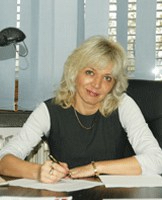
 The ECMI Council has appointed Nataša Krejić as new Vice-President of ECMI. She will take up her duties on 1 January 2018. Nataša Krejić is a full professor at the Department of Mathematics and Informatics, Faculty of Sciences, University of Novi Sad, Serbia, and has been a member of the ECMI Council since 2012. Nataša Krejić is one of the coordinators (with Alessandra Michelleti) of the new ECMI SIG on Mathematics for Big Data and Working Group leader in the COST TD1409 Action Mathematics for Industry Network (MI-NET).
Author: MI-NET Admin
Ink Bubble Formation at the ICMS Modelling Camp in Edinburgh

By Michael Pegg

The problem I (Mike) worked on involved investigating the creation and growth of bubbles inside an ink printer cartridge. The problem was brought by Dr William Lee from the University of Portsmouth who also acted as our group leader. Our international group had members from as far afield as Pakistan and academic backgrounds ranging from fluid mechanics to differential geometry.
 We were presented with a new kind of ink cartridge which uses high frequency vibrations to create small ink droplets. The cartridge consists of 3 components. An ink reservoir with a depth of 1 centimetres. A plate at the bottom of the reservoir vibrating ultrasonically at 10,000 hertz. A conical nozzle embedded in the centre of the vibrating plate with a maximum diameter of 50 micrometers, aminimum diameter of 5 micrometers and a thickness of 70 micrometers. The ink cartridge operates normally for some time, after which it fails. When the cartridges are cut open bubbles of around 0.2 millimetres are found inside the reservoir. We were tasked with investigating how the bubbles form with the overall goal to prevent bubble formation.
Our group leader offered three potential bubble formation mechanisms. Free surface recoil where asan ink droplet is shed the thread of liquid joining it to the bulk of ink recoils rapidly, like a snapped elastic band, which pulls bubbles inside the nozzle. Bubbles shedding off a gas pocket which forms inside the nozzle. Air-ink interface migrating to the reservoir side of the nozzle which sheds large bubbles. We added an additional potential mechanism in cavitation, where a vapour cavity is formed along the plate because of the vibrations.
 By the end of the week we had investigated a mechanism by which small bubbles, such as those formed by recoil, can grow and move up the pressure gradient. We compared the pressure due to plate oscillation relative to hydrostatic and atmospheric pressure and found it to be dominant. From this we focused on the effects of oscillations and looked into rectified diffusion, a mechanism by which bubbles in an oscillating pressure field can grow beyond their equilibrium radius. We also looked into the Bjerknes force, which is a lift force generated because of an oscillating bubble. The oscillations of a bubble were modelled numerically using the Rayleigh-Plesset equation. Finally we suggested a few novel ideas which could alleviate the bubble problem, such as adding a small amount of porous media on the walls of the cartridge to allow air to drain without letting ink through.
The workshop provided insight into the world of industrial mathematics and a rare opportunity to work with peers on a joint problem. It was an excellent week which has pushed me towards searching for a job in mathematical modelling and provided valuable experience. I would like to thank Dawn Wasley and everyone else involved in the organisation of this event.
Michael Pegg is a Research Student and associate tutor in the School of Mathematics at the University of East Anglia.
ComPh Modelling Week in Norway: A Stimulating Simulating Week

By Amy Leson
This March I had the opportunity to attend the ComPh Modelling Week hosted by Simula and the Helmholtz Zentrum München in Fornebu, Norway at the beautiful Technopolis building. I would like to thank the MI-NET, Mathematics for Industry Network, for sponsoring me to attend this event.
Goal of the Week: “…designing and implementing computational tools for modelling and data analysis from existing and developing experimental modalities in various biomedical fields…”
A Crash Course: From RNA Sequencing to Disease Prevention

A combination of stimulating lectures and hands-on projects were presented throughout the week. As an engineer, the lectures that included “biology” in the title instilled fear in me. However, I was luckily situated between two Biologists doing their PhD’s. Soon, I found myself being enlightened and thoroughly interested in the current development towards improved personalized care through Polygenic Risk scores and RNA sequencing. Additional lectures continued to focus on the transferability of methods and techniques to clinical use and the exciting prospects.
Maths + Modelling + Industry = Excitement!

As a key feature of this conference was to further apply mathematics to industry, T. Kessler from Alacris and E. Samset from GE Healthcare Ultrasound Division gave talks about the applications of modelling, imaging and machine learning to further improve healthcare. With many advanced imaging courses coming up in my semester, I was glued to these talks and am keen to further apply my learning in order to contribute to these fields.
Predicting Aneurysm Rupture is Difficult

Time not spent in lectures were spent working on a variety of projects. With my background in the cardiovascular field, I couldn’t wait to get my hands on my project titled: “Accurate biophysical simulations with machine learning techniques” led by K. Valen-Sendstad. Our team, consisting of a multitude of academic backgrounds, chose to focus on the process between the “Image” and the “3D Model” which is highly subjective when done manually. Utilizing our knowledge from the “Math Guru” V. Naumova on dictionary learning, we denoised and inpainted images with the aim of being able to completely automate the process from Image to Risk Score. It was great fun, and I am excited to utilize some of these tools in my projects in imaging and 3D printing!
What do you get when you put biologists, mathematicians and engineers in one room?
Some of my takeaways:

- The future of modelling in the healthcare field is exciting and relevant for more personalized treatments.
- “All models are wrong, some are useful” – J. Hasenauer emphasizing that models are context specific and the importance of validation.
- If you get a group of biologists, mathematicians and engineers together they will have tons of fun and nerdy jokes. We enjoyed some delicious pizza with radius “z” and thickness “a” whose volume was pi(z*z)a.
Amy Leson is an engineer pursuing a M.Sc. in Biomedical Engineering at the University of Applied Science in Hamburg, Germany to build on my B.ASc. from the University of British Columbia in Vancouver, Canada. She is seeking out opportunities to learn more about personalized and preventative medicine and enjoys running, biking and swimming.
Modelling Camp 2017

In March 2017, 24 PhD students came to ICMS for a four day Modelling Camp to apply their mathematical skills to realistic problems. Modelling Camps are excellent preparation for attending Study Groups where mathematicians collaborate with industry, analysing and solving real problems.

Students and Instructors at the 2017 Modelling Camp
Following a structure akin to the Study Groups, students formed into small groups after a morning listening to four problem descriptions from four problem setters. For the ICMS Camp we had a variety of topics for the students to get to grips with:
- Bottle Testing
- Laser Scintillation
- Ink Jet Head
- Marine Acquistion Technology
Once the students were matched with appropriate problems, the remaining days predominantly involved group working under the guidance of the problem instructors. Each group presented regular updates on progress to the others and there was a final presentation on the last morning. Photos below, show each group after their final presentation with their hard earned chocolate oranges!


Problem Groups after final presentations, from left Bottle testing, Laser Scinitillations, Ink Jet Head, Marine Acquisition Technology
There was lots of lively discussion and blackboards were in great demand! A prize for the best team was awarded on the final day. More photos are available on our flickr stream.


Photos of blackboard use during Modelling camp and winning group (Bottle Testing)
Read more about the ICMS Modelling Camp in our interviews with two of the participants.
Mohsin Javed, University of Oxford

Tell me about today’s event and your role in it:
I am here at the ICMS modelling camp and our group is trying to solve an industrial problem. We are six PhD students from 5 different countries and we are all working together and having a lot of fun. I don’t have a particular role but as a relatively senior PhD student, I am taking a lead on various aspects of modelling the problem and eventually creating simulations.
What problem are your working on, and how have you found it?
Our mission is to reduce the number of false rejections in a factory which produces air tight bottles. In the present mechanism, quite a few bottles are initially rejected which turn out to be fine on a second examination. We want to considerably reduce the number of initial false rejections without introducing too many cases where a bad bottle is accepted.
Is the maths similar, or different, from your own research?
The maths is quite different from my own research. I work in approximation theory but this problem is very much in the domain of fluids, statistical estimation and machine learning.
What do you think is the main benefit of taking part?
I am moving into the industry after my PhD so for me it’s a wonderful opportunity to get a sense of the problems encountered in real life and in real time. It’s also extremely important to be able to work with people who do not necessarily have the same technical and cultural background as you do and this modelling camp is a great place to develop social skills to collaborate with a diverse group of people.
Do you have any advice for first-time Modelling Camp Participants?
Don’t hesitate to put yourself out of your comfort zone. You might feel a strong sense of belonging to one particular problem while all others might seem quite foreign to your own work. My advice is to try something new. You will be surprised to see how much you can learn in a short time! And there is no such fun like learning something new.
If you could solve one maths problem, what would it be?
Seriously? Ok, in that case, the Reimann hypothesis. But wait, that’s too easy. A much harder problem is to develop the perfect mathematical model for an economic system which eradicates poverty and makes this world a better place. I think this is perhaps less satisfying mathematically than the Reimann hypothesis but will certainly have a bigger positive impact on the world.
Do you have any thoughts regarding how we can raise the profile of maths?
I think it’s already quite high! But sometimes in a negative way, and let me explain why. The moment you tell someone that you are doing a degree in mathematics, people are in awe of your intelligence and (quite rightly?) think that you are a geek who lives in a world of numbers and equations far far away from the “real world”. Mathematics needs a better PR management than this. Mathematics trains you to think in a very coherent and logical way. In that spirit, mathematics perhaps is very close to law. Mathematicians are also great problem solvers and these days they are contributing to almost every branch of science, medicine, engineering, economics, social science and even neuroscience and politics. We need the world to know about this. We need to communicate this better.
Do you have any thought on how diversity in mathematics can be improved?
Mathematics tends to be polarising as a subject, especially for kids when they are very young and for boys and girls when they are in their teens. There is this notion in our society that either you are very good at mathematics or you are very bad at it. We have to make sure that a reasonable amount of mathematics is available and accessible for everyone. And I do not think that we lack the resources to do so. I think the problem is that most of us are growing with a binary sense of either a strong belonging or that of complete estrangement to mathematics. We can work on this.
Who is your favourite mathematician and why?
Cauchy, because my favourite equation is called Cauchy’s integral formula
Najlaa Alalwan, University of Strathclyde

Tell me about today’s event and your role in it:
I am one of the participants of the workshop. The participants are mathematical researchers from UK and other countries. They are supported by the workshop to come to discus and try to find solution for some real world applications.
What problem are your working on, and how have you found it?
What problem are your working on, and how have you found it? I am working on gradient problem, which was about modelling a discrete points to a continuous function and finding the approximated number of points to this function with less error.
Is the maths similar, or different, from your own research?
It was completely different, where I am working in graph theory.
What do you think is the main benefit of taking part?
Since I am working on different area of mathematics, I do not know anything about modelling and I always met students working in modelling. So I liked to know what is modelling.
Do you have any advice for first-time Modelling Camp Participants?
If they want to get good results in few days, then they should choose the problem that related with their own work.
If you could solve one maths problem, what would it be?
I think it would have been nice to work on the bottle problem during the modelling camp.
Do you have any thoughts regarding how we can raise the profile of maths?
I think that could be done when the work is based on collaboration with engineering sector to be much more applicable in real world application.
Do you have any thought on how diversity in mathematics can be improved?
I think that could be done by increase these workshops to include different areas of mathematics.
Who is your favourite mathematician and why?
I suppose my supervisor Prof. Ernesto Estrada. He is brilliant in how analyse the mathematics to be applicable in real world applications.
This blog post was first published in ICMS news
Why we need mathematics? – Application of mathematics in industrial problems in Macedonia

By Dr Tatjana Atanasova-Pacemska
On 26th of April 2017 the Faculty of Electrical Engineering and Information Technologies at Saints Cyril and Methodius University in Skopje, Republic of Macedonia, hosted an Industrial workshop: Why we need mathematics? – Application of mathematics in industrial problems in Macedonia.
The aim of the workshop was to create a mutually beneficial link between researchers in mathematics and real problems appearing in industrial capacities in Macedonia. To gain contacts and collaboration between academic participants and people working in industry that could lead to long-term research collaborations and introduce challenging new research areas.
The industrial workshop was opened by local organizer Biljana Jolevska-Tuneska.
A series of talks were given by the following:
- Biljana JOLEVSKA-TUNESKA (UKIM)
- Jane STANOJOVSKI (ITgma)
- Gjorge LAZAROV (Relevant )
- Nikola TUNESKI (UKIM)
- Andrej MANEVSKI (Innelipse)
- Dame ANTOV (Neotel)
- Bojan PRANGOSKI (UKIM)
At the end, a discussion was opened covering the topics of this industrial workshop, i.e. the need of mathematics and its application in the industry. It was concluded that these kind of one day events are excellent opportunity for both people from Universities and industry to meet each other, share their problems and make stronger connections for future collaboration.
 Dr Tatjana Atanasova-Pacemska is Head of the
Department of Mathematics and
Statistics and Founder of the
Statistical Laboratory at Goce
Delcev University of Stip, Macedonea
Industrial Maths in Action

This meeting which focusses on ‘How to do Industrial Maths’ will be held at the ICMS in Edinburgh on September 19 and 20. http://icms.org.uk/workshops/KEECMI2017 .
Sponsored by ECMI and MI-NET it will consist of two parts. On the first day presentations will highlight various different ways in which the gap between academic mathematicians and industrial applications has been bridged and the ways in which problems have been overcome. The second day will consist of a ministudy group where several real problems will be brainstormed to offer a taster of this successful method of technology transfer to both mathematicians and industrialists.
There is no registration fee to attend this meeting.
Hilary Ockendon
New Methods and Results for the Optimisation of Solar Power Tower Plants

By Thomas Ashley
The aims for this STSM were to further develop the working relationship between my research institute and our project partners TSK Flagsol and the University of Aachen, as well as to present results and develop new ideas for the future.
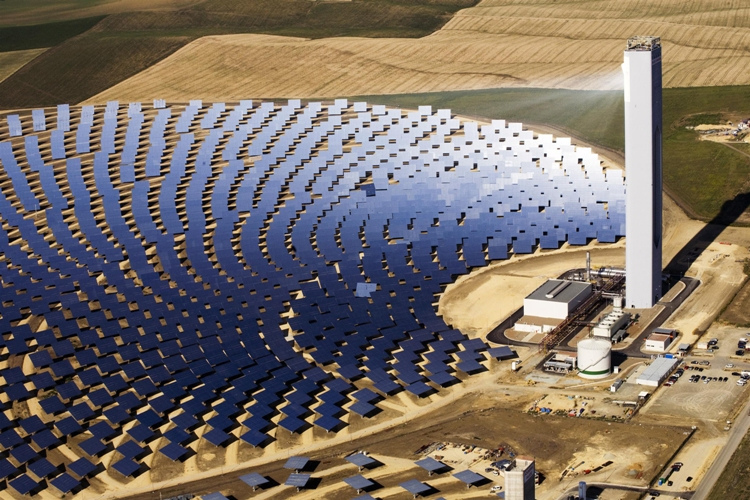
A Solar Power Tower (SPT) plant uses a field of mirrors to focus the sun’s energy onto a central receiver, mounted atop a tower, where the concentrated solar energy is then used to drive a turbine and produce electricity. The team at IMUS have published numerous papers on the optimisation of SPT plants, and continues to research in this area and foster relationships with industry.
From my recent STSM to Germany, I was able to work with our academic and industrial partners to develop two new lines of research in SPT plant optimisation. Specifically, we are now considering the optimisation of the transfer of thermal energy through SPT plant subsystems, as well as the optimal plant configuration when considering the cleaning requirements of the mirrors.
From these initial ideas we will work towards innovative solutions that will be published in journals and further assist in the development and implementation of green energy technology.
The outcomes from this visit were the development of two new research lines, which bridge the gap between academia and industry, where the end result will be engineering advancement and publication of research papers.
Thomas Ashley is a PhD student in Mathematics at the University of Seville, Spain, researching into the optimisation of the renewable energy technology Solar Tower Power Plants. Thomas has an MSc in Advanced Mathematics from the University of Exeter, UK. He has previously worked for six years applying mathematics within the Defense engineering industry.
My experiences at ComPh Modelling Week in Oslo

by Eike Krautter

When I first heard about the ComPh-Modelling week from one of my professors I was fascinated because I already wanted to learn more about simulation and modelling in the field of Biology and to meet other people from different fields using models in their work. As a biologist having lots of Systems Biology lectures and being familiar with general modelling strategies used in Biology, I hoped I could keep up with mathematicians and computer scientist because they mostly have a deeper knowledge on how modelling works. My expectation was to get a better overview of Systems Biology and the tools being used to achieve knowledge in this field. Especially I was interested in RNA-Sequencing methods and their applications because I only had little lectures about it and I think it is an important technique.
I was not expecting to receive a scholarship so I was even more excited when I flew to Oslo whether me as a master student would be able to be an enrichment for the course.
All lectures and invited talks were very interesting, also the lectures about presentation and visualisation. The topics of the lectures were very diverse. From some I had previous knowledge others like “Big Data” and image processing were totally new to me.
Everyone was working in one project where the input from the lectures was deepened and we could learn exactly how the tools worked. The project I was working on was named “RNA-sequencing: from reads to biological insight” and was supervised by Lukas Simon from the Helmholtz Zentrum Munich. He provided us a workflow to process NGS Data completely on our own computers and showed us how we could perform such an analysis easily on a cloud computer. After the explanation and an example, we downloaded datasets from a database and started to process these data on our own.
Lukas did a very good job and invested a lot of time in making sure everyone understood how it must be done correctly and how it can be done at home. He really made us ready for using the tools he introduced and helped us in interpreting the results.
After a presentation of our results the Modelling week finished and we enjoyed the rest of the day in the city visiting the Fram museum about the Pole expeditions. Throughout the week I enjoyed spending evenings with other attendees to have dinner, to talk and to sightsee.
All in all, I am very glad that the possibility of joining the Modelling week was given to me. My expectations were totally fulfilled and I learned so much from the lectures and the discussions with the other attendees that I would not have learned from my lectures here in Stuttgart.
Eike Krautter is a student at the University of Stuttgart
Funding and travel for PhD students?

Are you looking for funds to finance your research visit? Our call for applications is on 30th August 2017.
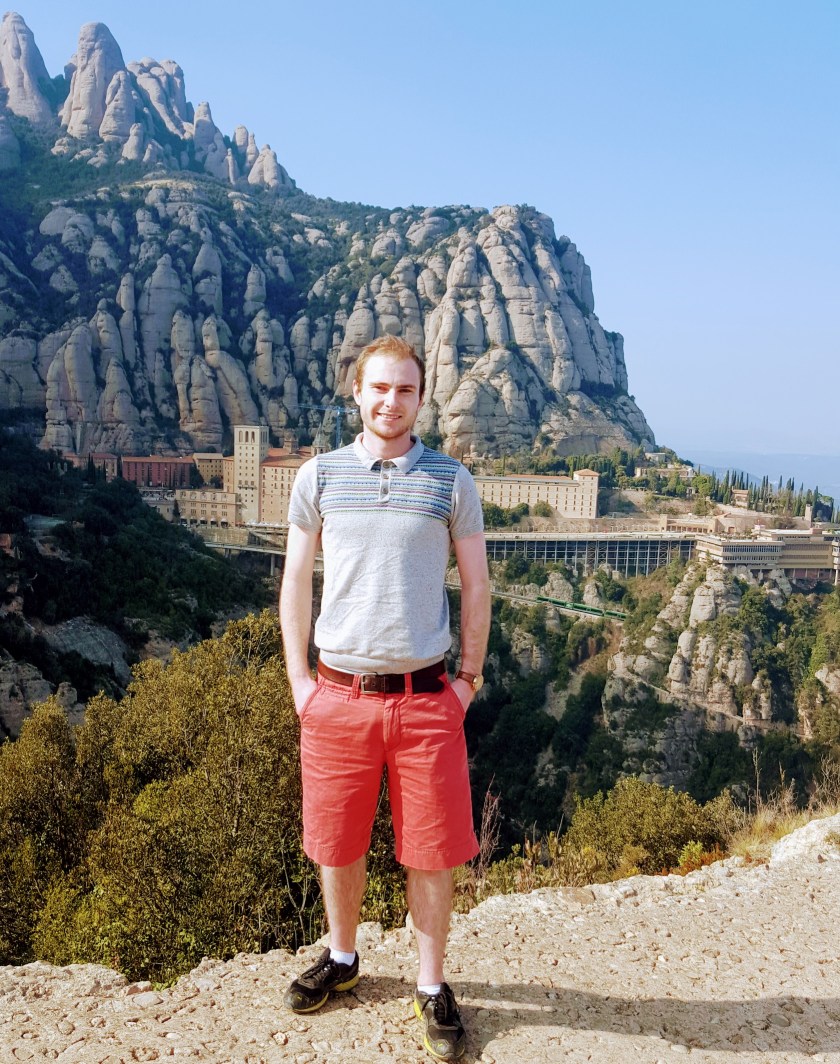
Last May I visited the Centre de Recerca Matemàtica (CRM), a research institute located on the campus of the Universitat Autònoma de Barcelona, Spain. I am a PhD candidate at the University of Limerick, Ireland and this international trip was my second visit to the CRM to work with my PhD co-supervisor Prof Tim Myers. In this blog post, I will discuss international travel from the perspective of a PhD student.
Firstly, travel needs to be paid for, and to secure funding one needs to be proactive. I have submitted four grant applications as a PhD student; luckily for me, three of these applications were successful. The Mathematics for Industry Network funded my first visit to the CRM (Grant No: ECOST-STSM-TD1409-290216-071429). The Irish Research Council funded my second and most recent trip to the CRM (Grant No: GOIPG-2014-887). And, the Society for Industrial and Applied Mathematics (SIAM) along with the…
View original post 254 more words
Artificial Intelligence in Industry and Finance (2nd European COST Conference on Mathematics for Industry in Switzerland)
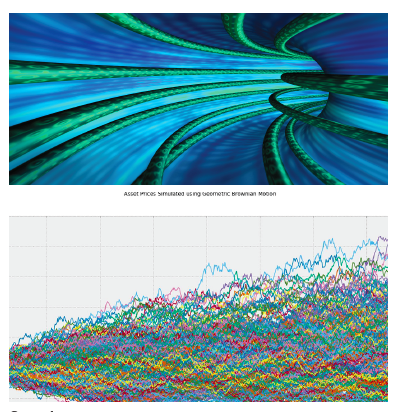
September 7, 2017 (09:30-16:30)
ZHAW, Technikumstrasse 9, 8400 Winterthur
Artificial Intelligence in Industry
- Machine learning for industry
- Simulation, Model order reduction and robust optimization for industrial robotics and E-Mobility applications
- Advanced imaging for industrial application
- Optimization and Optimisation-Based control methods for industrial applications
Artificial Intelligence in Finance
- Algorithmic trading
- Big data and digitalization
- Mathematical challenges for the Fintech industry
- Quantitative trading models
- Machine learning for finance
- Deep learning and neutral networks
- Financial networks and sentiment analysis
Speakers
Financial Mathematics
- Saeed Amen, Cuemacro
- Dr. Christopher Bruffaerts, InCube
- Prof.Dr. Matthias Fengler, HSG
- Dr. Julian Lorenz, Bantleon Bank
- Prof. Dr. Natalie Packham, Berlin School of Economics
Law
- Dr. Jochen Papenbrock, Firamis
- Dr. Brian Peterson, Braverock
- Henrik Stutz, Partners Group
- Prof. Dr. Mario Wüthrich, ETH Zürich
Industrial Mathematics
- Dr. Juan Pablo Carbajal, EAWAG
- Dr. Martin Fengler, Meteomatics
- Prof. Dr. Joachim Giesen
- Dr. David Mordaunt, Precision Light
Contact: ZHAW School of Engineering, Institut für Datenanalyse & Processdesign, Technikumstrasse 9, CH 8400 Winterthur
Email: mathematics-for-industry@zhaw.ch
Registration at : https://www.zhaw.ch/iamp/industrial-mathematics
IDP Institut für Datenanalyse und Prozessdesign Zürcher Fachhochschule
 MI-NET